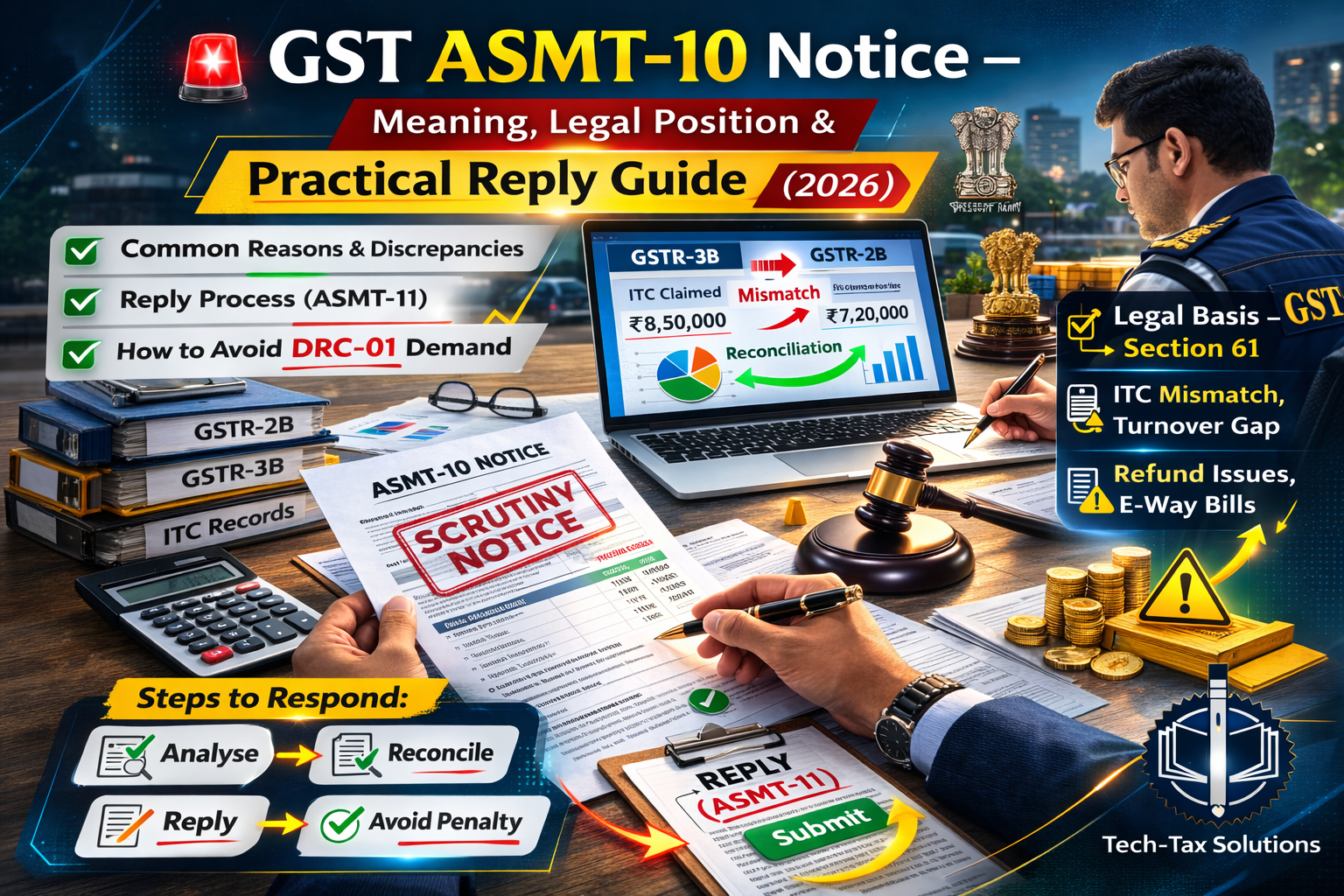
GST ASMT-10 Notice – What It Means & How to Respond (2026 Practical Guide)
Received GST ASMT-10 notice? Understand what scrutiny notice means under Section 61, common reasons, reply strategy, and how to avoid demand under DRC-01.
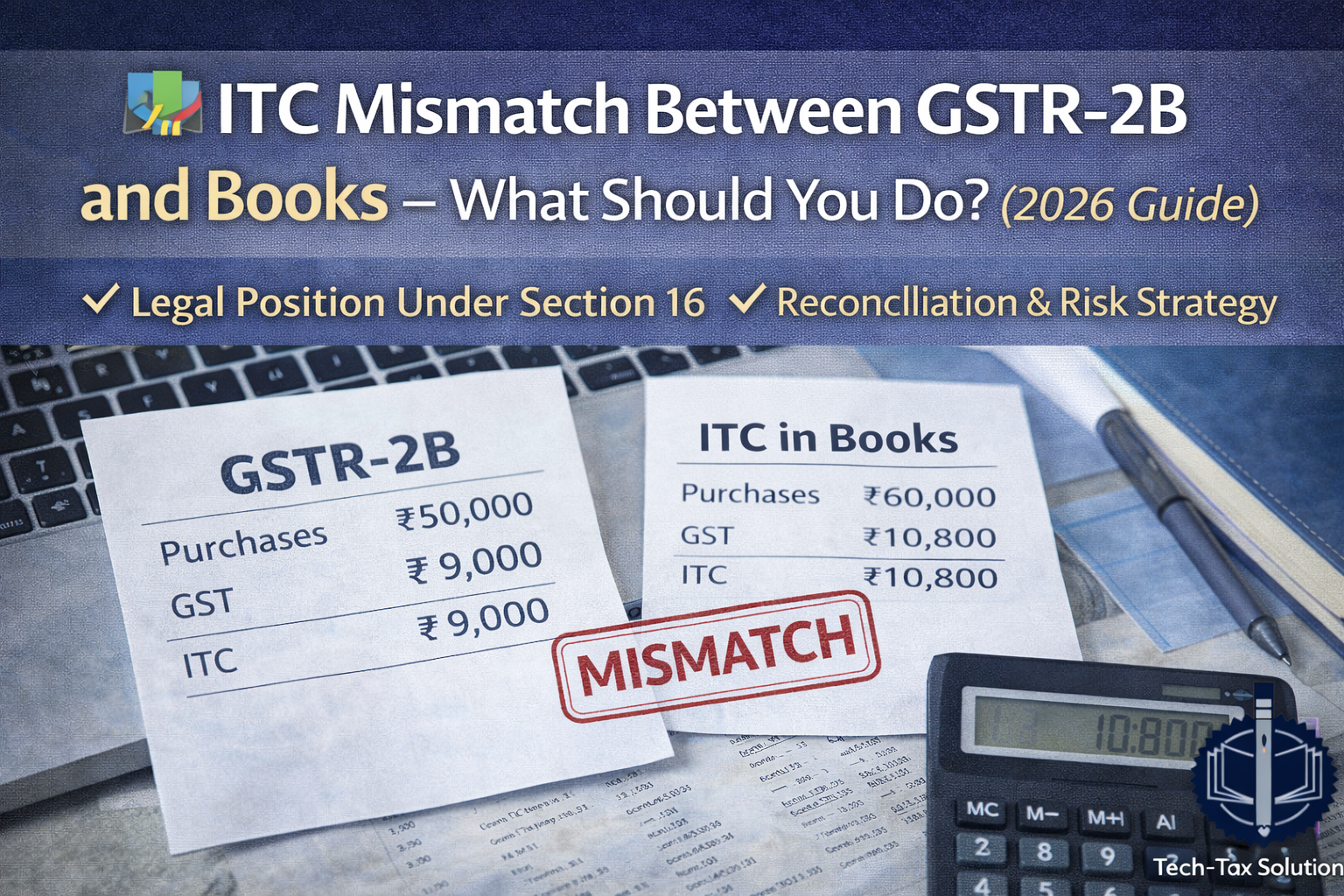
ITC Mismatch Between GSTR-2B and Books – What Should You Do? (2026 Guide)
Facing ITC mismatch between GSTR-2B and purchase register? Learn legal position under Section 16, practical reconciliation steps, risk areas and how to handle GST scrutiny.
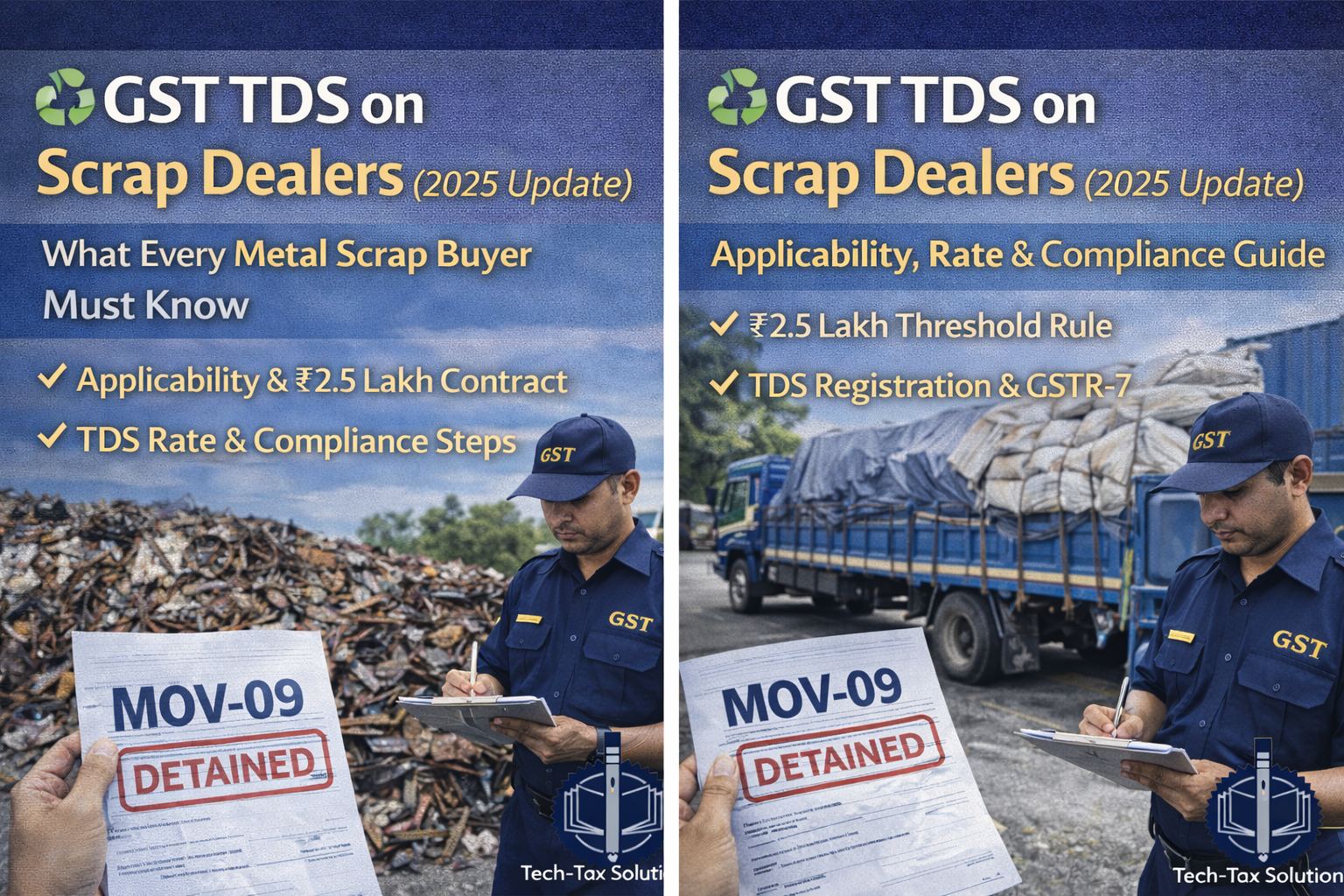
♻️ GST TDS on Scrap Dealers (2025 Update)
GST TDS now applies on purchase of metal scrap under Notification No. 25/2024-CT. Understand applicability, rate, threshold, compliance requirements, and practical implications for scrap buyers.
How to File GST Appeal Against Detention Order – Complete Section 107 Guide (2026)
Want to challenge GST detention penalty? Learn how to file appeal under Section 107 against Section 129 order, time limits, pre-deposit requirements and practical strategy explained.
⚖️ Difference Between Section 129 and Section 130 of GST – Detention vs Confiscation (2026 Guide)
What is the difference between Section 129 and Section 130 of GST? Learn when goods are detained, when confiscation applies, penalty implications, and legal remedies explained clearly.
MOV-07 Notice under GST – How to Reply? (Complete Practical Guide 2026)
Received MOV-07 notice under GST? Learn what MOV-07 means, how to draft a proper reply, penalty implications under Section 129, and practical strategies to reduce liability.
Section 129 GST Detention – Complete Practical & Legal Guide (2026)
Section 129 GST detention explained in simple terms. Learn penalty calculation, MOV notices, release procedure, legal remedies, and latest practical insights to handle GST vehicle detention.
E-Way Bill Expired in Transit – What to Do? (2026 Practical Legal Guide)
E-way bill expired during transit? Learn how to extend validity, avoid detention under Section 129, penalty implications, and practical legal solutions with real-life scenarios explained.
Finance Bill 2026: 5 GST Changes Every Business Must Know (Practical Impact Explained)
Finance Bill, 2026 introduces major GST changes impacting discounts, credit notes, refunds, intermediary services and advance rulings. Here are the 5 most important changes every business must understand.
GST Credit Notes Simplified in Finance Bill 2026 – Section 34 Amendment Explained Clearly
Finance Bill, 2026 amends Section 34 of the CGST Act to expressly allow credit notes for post-supply discounts. This article explains what has changed, who benefits, and how to comply correctly.
Advance Ruling Appeals under GST: New Interim Authority Introduced in Finance Bill 2026
Finance Bill, 2026 introduces a temporary appellate mechanism for GST Advance Rulings till the National Appellate Authority is constituted. Section 101A amended to remove long-standing uncertainty.
GST Refund Rules Relaxed in Finance Bill 2026 – Big Relief for Exporters & Inverted Duty Cases
Finance Bill, 2026 relaxes GST refund provisions under Section 54. Provisional refund extended to inverted duty cases and ₹1,000 minimum limit removed for export with payment of tax. Explained simply.
Intermediary Services GST Changed in 2026 – Big Relief for Export of Services?
Finance Bill, 2026 removes intermediary services from Section 13(8) of the IGST Act. This change may allow many intermediary services to qualify as export of services. Explained simply with impact and precautions.
GST Discount Rules Changed in 2026 – Big Relief for Businesses (Section 15 Explained)
The Finance Bill, 2026 has significantly relaxed GST rules for post-sale discounts. Businesses can now issue discounts through credit notes without prior agreements. Here’s what Section 15 amendment means for you.
Finance Bill 2026 – CGST & IGST Amendments Explained | Clauses 137–141 Analysis
The Finance Bill, 2026 proposes targeted amendments to the CGST Act and IGST Act through Clauses 137–141. This article provides a clear section-wise “before vs after” comparison covering discounts, credit notes, refunds, advance ruling appeals, and place of supply changes.
Related Posts
-
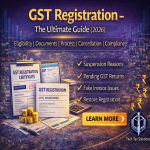
GST Registration – The Ultimate Guide (2026)
05 Mar 2026 -
-
-
-