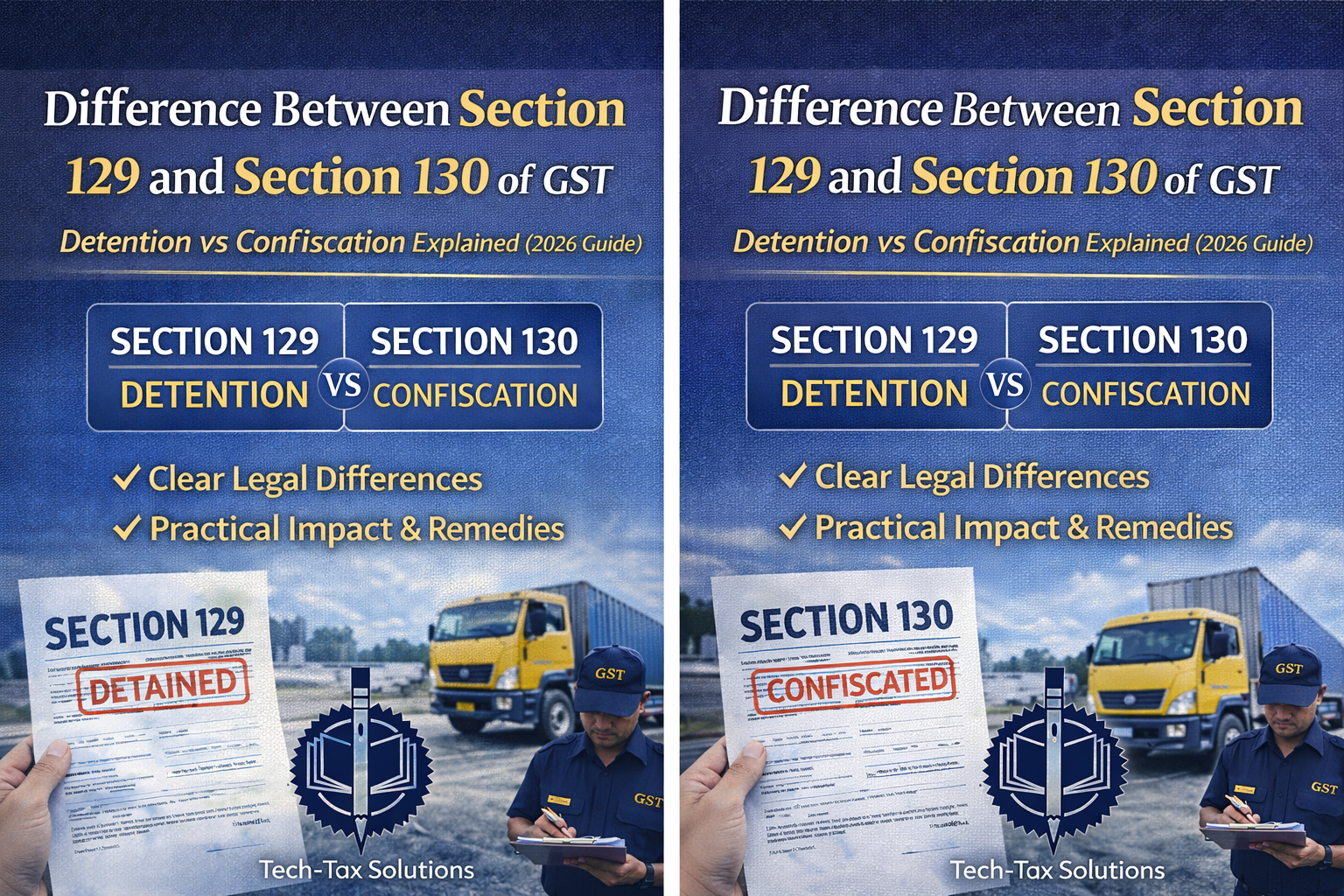
📌 Why This Difference Is Very Important
Many taxpayers panic when goods are intercepted because they do not understand:
-
Is this detention?
-
Or is this confiscation?
-
What is the difference?
-
Can goods be permanently seized?
Understanding the difference between Section 129 and Section 130 can save lakhs in penalty and litigation.
🔍 Section 129 – Detention of Goods in Transit
Section 129 applies when:
-
Goods are moving without proper documents
-
E-way bill expired
-
Vehicle details incorrect
-
Minor mismatch in documents
It is a temporary detention provision.
Key Features of Section 129:
✔ Goods can be released on payment of penalty
✔ Proceedings are civil in nature
✔ Focus is on compliance breach
✔ Not automatic confiscation
Penalty usually = 200% of tax (owner comes forward).
🔴 Section 130 – Confiscation of Goods
Section 130 is far more serious.
It applies when there is:
-
Intent to evade tax
-
Supply without invoice
-
Fraudulent transaction
-
Repeated serious violations
-
Use of conveyance knowingly for tax evasion
This is not procedural — it is punitive.
📊 Section 129 vs Section 130 – Clear Comparison Table
| Particulars | Section 129 | Section 130 |
|---|---|---|
| Nature | Detention | Confiscation |
| Severity | Moderate | Severe |
| Intent required | Not necessarily | Yes (evasion intent) |
| Release possible? | Yes | Conditional / difficult |
| Penalty | 200% of tax | Tax + penalty + fine |
| Goods ownership impact | Temporary hold | Risk of permanent confiscation |
🧠 Practical Real-Life Scenarios
🟢 Scenario 1: Expired E-Way Bill
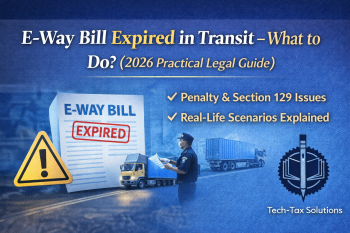
Officer intercepts vehicle. E-way bill expired by 5 hours.
✔ Correct provision → Section 129
❌ Not Section 130
If officer invokes Section 130 directly, it may be challengeable.
🟢 Scenario 2: Fake Invoice Movement
Goods moving with fake invoice and undervaluation.
✔ Likely case of Section 130
✔ Intent to evade tax present
Here confiscation proceedings may be justified.
🟢 Scenario 3: Minor Quantity Difference
Invoice shows 100 units. Physical check shows 102 units.
✔ Generally Section 129
✔ Explainable procedural variance
Jumping to confiscation would be disproportionate.
⚖️ Important Judicial Principles
Courts have repeatedly observed:
-
Section 130 cannot be invoked casually
-
Section 129 must be concluded first
-
Confiscation requires evidence of intent
-
Proportionality must be maintained
Many High Courts have restrained officers from mechanically invoking Section 130.
🚨 Why Officers Sometimes Jump to Section 130
In practice:
-
To increase pressure
-
To demand higher payment
-
To treat every violation as evasion
But legally, Section 130 requires stricter conditions.
📋 What Should Businesses Do If Section 130 Is Invoked?
✔ Carefully examine notice grounds
✔ Check whether intent is properly alleged
✔ File detailed objection
✔ Challenge premature invocation
✔ Consider writ remedy if required
Confiscation is not automatic — it must be legally justified.
❌ Common Mistakes Businesses Make
-
Assuming detention = confiscation
-
Paying heavy penalty without review
-
Ignoring procedural defects in notice
-
Not challenging wrongful Section 130 invocation
These mistakes increase exposure unnecessarily.
🏁 Final Takeaway
Section 129 and Section 130 serve different purposes:
-
129 = Compliance breach handling
-
130 = Punishment for tax evasion
Understanding the difference allows businesses to respond strategically instead of emotionally.
📞 Advisory Note
If goods are detained or confiscation proceedings are initiated, the choice of legal strategy depends on whether Section 129 or 130 is applicable. Early assessment is critical.





)